Description
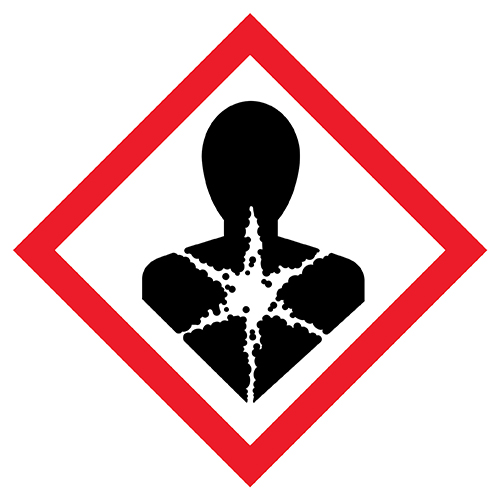
Label GHS05 100x100mm — Corrosive effects
Self-adhesive GHS05 label, 100x100mm, for Corrosive effects. The ready-printed pictogram provides a recognisable graphic element for appropriately classified chemical packaging, without the need to prepare the artwork yourself.
What does the GHS05 pictogram mean?
GHS05 depicts liquid affecting a hand and a metal surface. It covers skin corrosion, serious eye damage and corrosion to metals in the relevant CLP categories. A product carrying the symbol does not necessarily have all these properties at once; its hazard statements provide the detail.
Corrosion and irritation are different classifications. Serious eye damage associated with GHS05 is not the same as eye irritation, which may involve GHS07. The symbol must reflect the actual formulation and classification, including concentration.
Applications and choosing the right symbol
Examples include appropriately classified acids, alkalis and industrial cleaners, or products causing serious eye damage or metal corrosion. Do not assign GHS05 to every acid or alkali without checking its classification. Apply the precedence rules when considering GHS05 together with GHS07.
Polypropylene film with a laminate
The label is made from polypropylene film with an additional polypropylene laminate. The laminate covers the print and is a practical option for packaging used in industrial environments. The self-adhesive construction makes it easy to apply a ready-printed pictogram by hand.
Before using the label on a particular plastic, curved surface or packaging exposed to chemicals, test adhesion and durability under the intended conditions. Resistance depends on the substance involved, contact time and working environment. A laminate should not be assumed to provide equal protection against every solvent or cleaning agent.
100x100mm format and pack sizes
The product measures 100x100mm. Choose between 10 labels and 450 labels per roll. A smaller pack suits short labelling runs; a roll is convenient where labels are used regularly. Check the selected variant, price and stock availability before ordering.
Choose the marking size to suit the package and the complete label layout. The advertised sticker size is not automatically the size of the pictogram field, nor confirmation of suitability for every packaging capacity. Assess legibility and the relevant CLP requirements for the intended use.
A pictogram as part of a CLP label
In the European Union, labelling is based on Regulation (EC) No 1272/2008 (CLP). Check the product’s current classification and the label elements in Section 2 of its safety data sheet, where one is required. Also consider the rules of precedence for pictograms.
A sticker bearing only a symbol is not a complete chemical label. Depending on the product, other required elements include its identifier, supplier details, a signal word, hazard and precautionary statements and supplementary information. CLP pictograms and ADR transport labels serve different purposes and should not be treated as interchangeable.
Applying and checking the label
- Choose a position that keeps the complete pictogram and the other required information visible.
- Remove dust and dirt; prepare a dry surface using a method suitable for the substrate and workplace safety procedures.
- Apply without creases and press evenly, paying particular attention to the edges.
- Do not cover identification details, instructions or other mandatory markings.
- Check legibility and adhesion during use; replace damaged or unreadable labels.
European manufacturer of self-adhesive labels
Print&Stick is a European manufacturer of self-adhesive labels. When choosing GHS05, match the pack size to the number of containers to be labelled and your rate of use. Use the pictogram code and dimensions for repeat orders to maintain consistent markings.
Other symbols are available in our GHS labels category. If you need help choosing a material or pack size, tell us the surface type and working conditions. The choice of symbols must follow the classification of the chemical product being labelled.